Key Takeaways
Choosing between faux wood beams, natural wood box beams, and solid wood beams comes down to budget, installation requirements, and long-term upkeep. While all three options offer a similar appearance, both faux wood beams and natural wood box beams are lighter, easier to install, and require little maintenance over time.
This guide breaks down the key differences so you can quickly evaluate which option aligns with your project needs.
Side-by-Side Comparison
Use the comparison table below as a quick reference to see how faux wood beams, natural wood box beams, and real wood beams differ across key categories. Each section that follows expands on these points in more detail.
| Beam Feature | Faux Wood Beams | Natural Wood Box Beams | Real Solid Wood Beams |
|---|---|---|---|
| Appearance | Realistic wood textures with consistent grain patterns | Authentic cedar with natural variation in grain, tone, and texture | Natural wood with unique grain variation |
| Cost (Upfront + Installation + Long-Term) | Lower material cost, reduced installation expense, and minimal long-term upkeep | Higher material cost than faux beams, but reduced installation labor compared with solid wood | Higher material and installation costs, with ongoing maintenance over time |
| Weight | Lightweight and easy to handle | Significantly lighter than solid wood due to hollow box construction | Very heavy |
| Ease of Installation | Installed with standard tools and basic framing | Installed with standard tools and basic framing | May require structural support and specialized tools |
| Customization | Multiple textures, colors, and unfinished options; available up to 30' long and 36" high or wide | Multiple textures, finishes, and unfinished options; joints required over 14' long, with possible seams over 7" high or wide | Available in different wood species and finishes, with custom milling increasing cost |
| Maintenance & Durability | Resistant to moisture, insects, and temperature changes with no refinishing required | Minimal indoor maintenance beyond occasional dusting or light cleaning | Requires sealing, staining, and monitoring for cracking or insect damage |
| Pest Resistance | Does not attract termites or other wood-boring insects | Natural cedar offers some pest resistance but is not pest-proof | Susceptible to termites and other pests |
| Best For | Decorative applications where lower weight, simpler installation, and minimal upkeep are priorities | Decorative applications where authentic wood character, lower weight, and easier installation than solid wood are priorities | Structural use or projects where solid wood is preferred despite added weight and maintenance |
Wood beams are a common way to add depth and detail to a ceiling. When planning a project, most homeowners choose between faux wood beams, natural wood box beams, and solid wood beams.
The sections below take a closer look at how these three beam options compare so you can make an informed decision before moving forward.
What Are the Differences?
When choosing decorative ceiling beams, one of the main decisions is whether to use faux wood beams, natural wood box beams, or solid wood beams. While the three can look similar once installed, they differ in cost, weight, installation requirements, and ongoing maintenance.
Each section below focuses on a key factor—cost, weight, installation, customization, and maintenance—so you can compare how each option performs in real-world use.
Appearance: Faux Wood vs. Natural Wood Box Beams vs. Solid Wood
Faux wood beams are designed to replicate the look of real wood, with consistent textures and finishes across each beam. This allows for a more uniform appearance throughout a project.
Natural wood box beams are made from real cedar, providing authentic variation in grain, tone, and texture while using a hollow box construction instead of solid timber.
Real solid wood beams also offer natural variation in grain, knots, and color, which can appeal to homeowners looking for authentic material characteristics.
All three options can achieve a similar overall look once installed, but the choice often comes down to whether consistent texture, authentic wood with a lighter box construction, or solid timber is preferred.
Cost: From Initial Purchase to Maintenance
Faux wood beams are typically more cost-effective across the full project, with lower material costs and reduced installation expenses since they can be installed without specialized equipment or professional labor.
Natural wood box beams generally have a higher material cost than faux beams, but their hollow, lightweight construction can make them just as easy to handle and install as faux wood beams.
Over time, faux beams require little to no additional investment. Natural wood box beams also require minimal indoor maintenance, although both faux beams and natural wood box beams may need an additional protective clear coat for exterior installations. Solid wood beams, on the other hand, may require periodic refinishing or repairs, adding to the overall cost.
Weight
Faux wood beams are made from high-density polyurethane and are significantly lighter than solid wood.
Natural wood box beams are also significantly lighter than solid wood beams because they are constructed from hollow cedar planks rather than a solid piece of timber.
For example, a 6" x 6" x 20’ faux beam weighs roughly 36 pounds, while a comparable solid wood beam can weigh several hundred pounds. This difference affects how beams are handled, transported, and installed.
Solid wood beams may require additional support or equipment during installation due to their weight. Faux beams and natural wood box beams can be positioned and secured more easily with common tools and fewer people.
Customization & Design Options
Faux wood beams are available in a wide range of textures, finishes, and sizes.
AZ Faux offers multiple beam styles designed to replicate natural wood grain, along with a broad selection of colors and stains. Unfinished beams are also available for projects that require a custom finish. Faux beams offer greater sizing flexibility, with options up to 30 feet long and 36 inches high or wide.
Natural wood box beams are available in multiple textures, finishes, custom sizes, and unfinished options. They are made to order and can also be configured with three or four sides and different joint styles. However, beams 14 feet or longer require joints, and beams greater than 7 inches in height or width may include seams.
Because they are lightweight and hollow, faux beams and natural wood box beams can be installed in a variety of layouts, including vaulted ceilings, flat ceilings, and decorative patterns. Accessories such as faux iron straps and plates can be added for additional detail.
Solid wood beams are available in different species and finishes, but options may be limited by material availability, weight, and the cost of custom milling.
Maintenance
Faux wood beams are designed to withstand moisture, insects, and environmental exposure without ongoing treatment. They do not require sealing, staining, or repainting, and their finish remains consistent over time. For exterior installations, we recommend applying a coat of high-quality clear exterior polyurethane with a UV inhibitor to help protect the stain from fading.
Natural wood box beams require minimal maintenance indoors, with occasional dusting or light cleaning typically sufficient. Similar to faux wood beams, a coat of high-quality clear exterior polyurethane with a UV inhibitor is recommended for exterior installations.
Solid wood beams require regular maintenance to preserve their condition. This can include sealing, refinishing, and monitoring for cracking, warping, or insect activity.
Installation Differences
Installation requirements vary significantly between faux wood beams, box beams, and solid wood beams.
Faux wood beams and natural wood box beams are both hollow and lightweight, making them easy to position and secure using standard tools. The installation process is exactly the same for both beam types, so you can use the same tools and follow the same detailed installation instructions. Most installations can be completed over a weekend.
Solid wood beams require more planning due to their weight. Structural support may be necessary, and installation often involves brackets, hangers, or additional framing. For larger beams, professional installation is typically recommended.
Featured Products and Design Ideas
If you’re interested in transforming your space with faux wood beams, check out these design ideas featuring some of our favorite faux beam products.
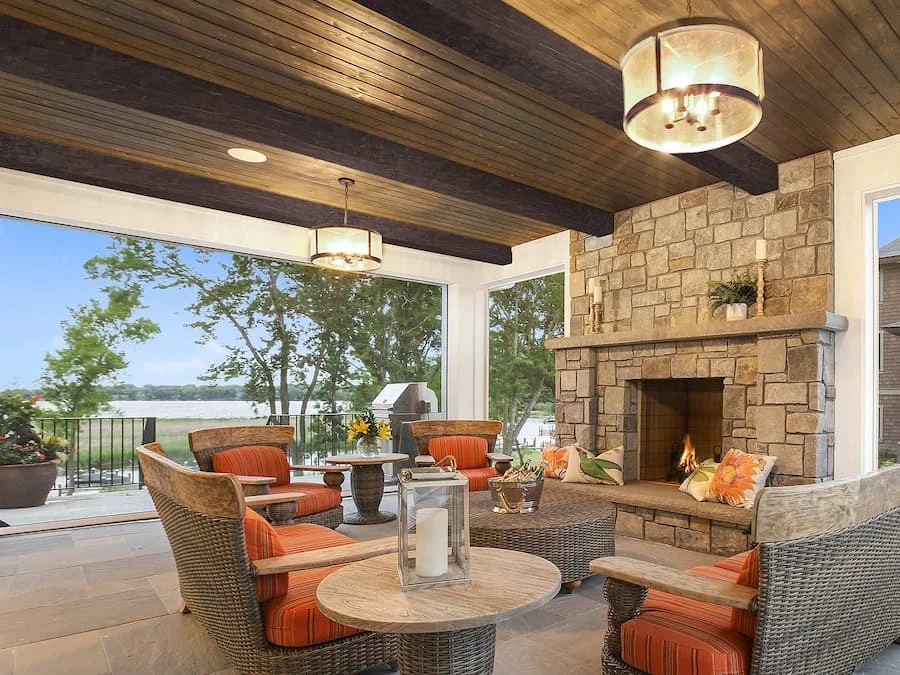
Magnolia Faux Wood Beams in Fresh Coffee |
Outdoor Beam ApplicationFaux wood beams are well-suited for exterior use due to their resistance to moisture, pests, and sun exposure. On this covered patio, distressed Magnolia Faux Wood Beams in Fresh Coffee follow the ceiling line and highlight the overhead layout without requiring ongoing maintenance. |
Coffered Ceiling DesignLightweight construction makes faux wood beams suitable for patterned ceiling layouts. This bedroom features a coffered ceiling with a grid pattern formed using Old Barn Faux Wood Beams in Sable, adding depth through a structured layout overhead. |
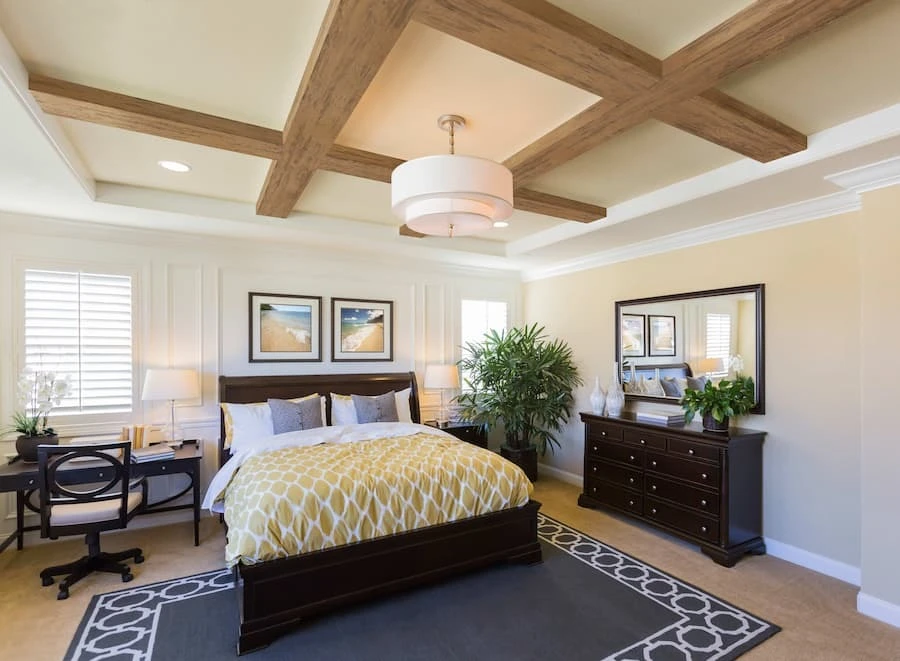
Old Barn Faux Wood Beams in Sable |
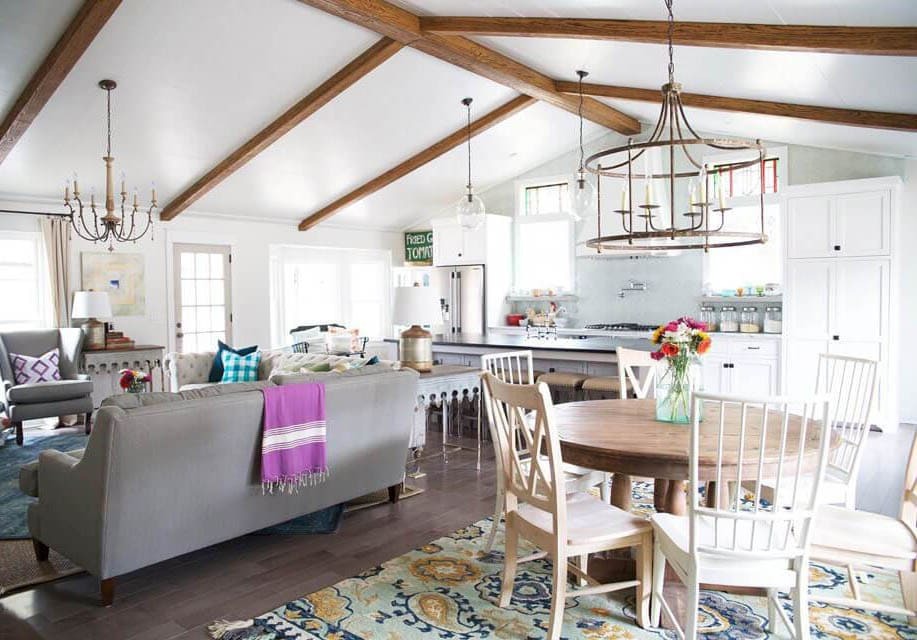
Old Tuscan Faux Wood Beams in Burnished |
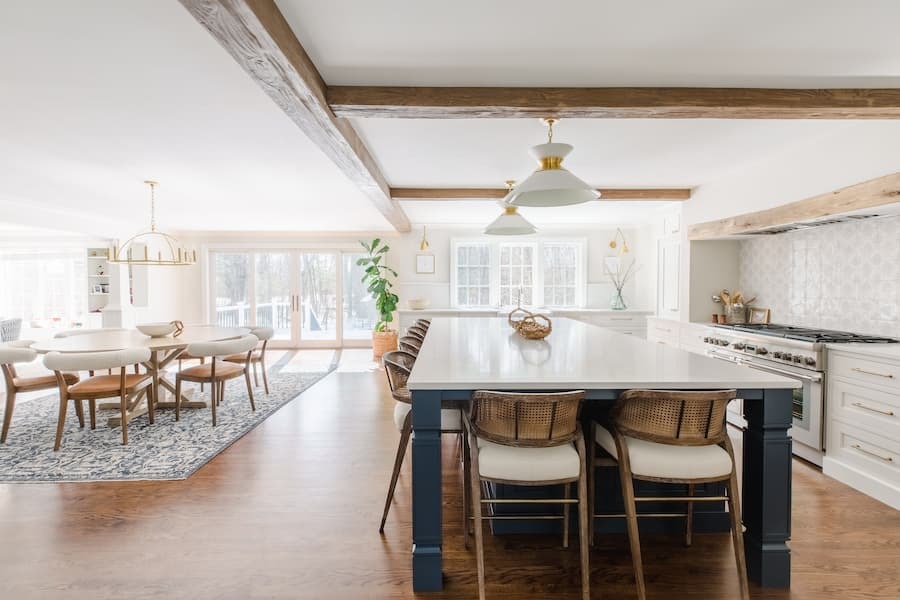
Vaulted Ceiling LayoutBeams on a vaulted ceiling create a more intimate atmosphere and draw attention to the gorgeous height of the ceiling. This open-concept living and dining area is visually combined into one cohesive space using Old Tuscan Faux Wood Beams in Burnished. |
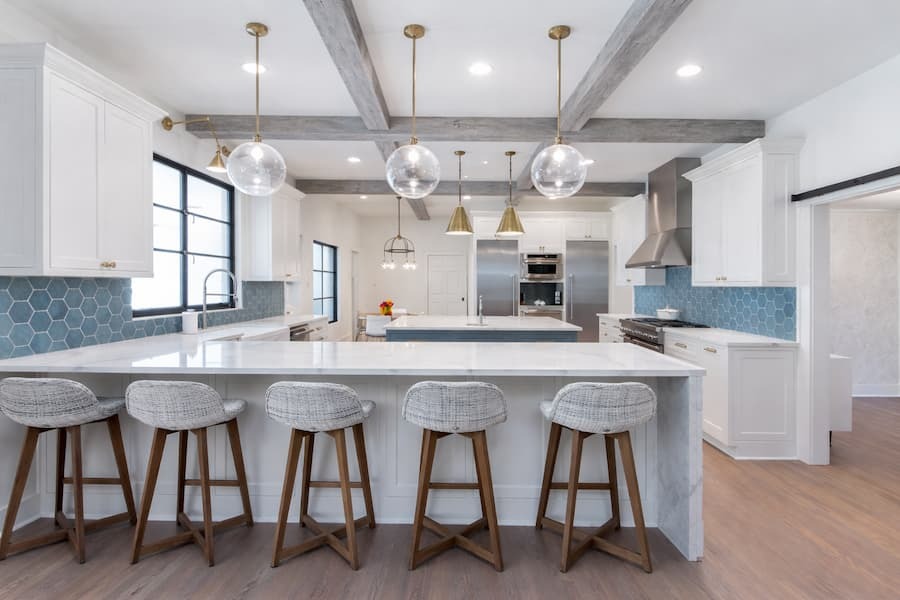
Kitchen Ceiling DetailTextured beam finishes can introduce contrast against smooth surfaces. In this kitchen, Heavy Hand Hewn Natural Wood Beams in Smolder Gray add a distinct texture overhead, pairing well with both modern and rustic finishes. |
Heavy Hand Hewn Natural Wood Beam in Smolder Gray |
Find the Right Beams for Your Project
Whether you're updating a single area or planning a larger renovation, faux wood beams and natural wood box beams offer a practical alternative to solid wood without the added weight or maintenance requirements.
AZ Faux offers a wide selection of beam styles, textures, and finishes to help you find the right option for your project. Browse the full collection to compare styles and see what works best for your space. Once you’ve chosen a beam style, use our beam size calculator to visualize your layout and determine the ideal number, size, and spacing of beams for your space.