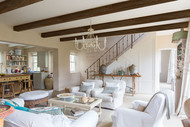
This guide helps homeowners choose the right faux wood beam size and spacing to create a well-balanced ceiling design. Before ordering beams, it’s important to consider factors like room size, beam dimensions, spacing, and layout direction.
We’ve also included a ceiling beam size and spacing calculator so you can visualize different configurations and find the right fit for your space.
Table of Contents
- Decorative Ceiling Beam Size Calculator
- How Far Apart Should Ceiling Beams Be?
- How Many Beams to Put on a Ceiling
- Ceiling Beam Spacing Design Ideas
- How Faux Wood Ceiling Beams Are Different from Solid Wood Beams
- Planning Your Faux Wood Beam Project
If you’re planning a DIY project in your home, and you intend on using faux wood beams, you’re probably already aware of the benefits. Exposed ceiling beams are a design element that can substantially elevate the look and feel of your home. Growing in popularity as a home design feature, wood beams are suitable for spaces of any shape and size, and can suit any look you’re going for.
After you’ve decided which beam style and finish you want, you’ll need to determine how many ceiling beams you need and how far apart to space your beams. This decision can feel overwhelming at first, but understanding a few key spacing guidelines will help you create a layout that looks balanced, intentional, and professionally designed.
To simplify the process, we’ve created this guide to walk you through each step.
Decorative Ceiling Beam Size Calculator
The size and spacing of your ceiling beams work together to define the overall look of your space. Choosing the right proportions can dramatically change how your ceiling is perceived—whether you want a more open feel or a more defined architectural look.
To explore different layout options, use our ceiling beam size and spacing calculator to visualize your design before you install.
This interactive tool allows you to:
- Experiment with different beam sizes and spacing
- Adjust the number of beams based on your room width
- Preview how your ceiling layout will look in a realistic 3D setting
Keep in mind that this tool is designed for visualization purposes and may not reflect exact structural requirements. Still, it’s a practical way to compare different design options and narrow down a layout that fits your design.
Not sure where to start? Try a few different spacing and size combinations in the calculator to see what works best for your space before ordering your beams.
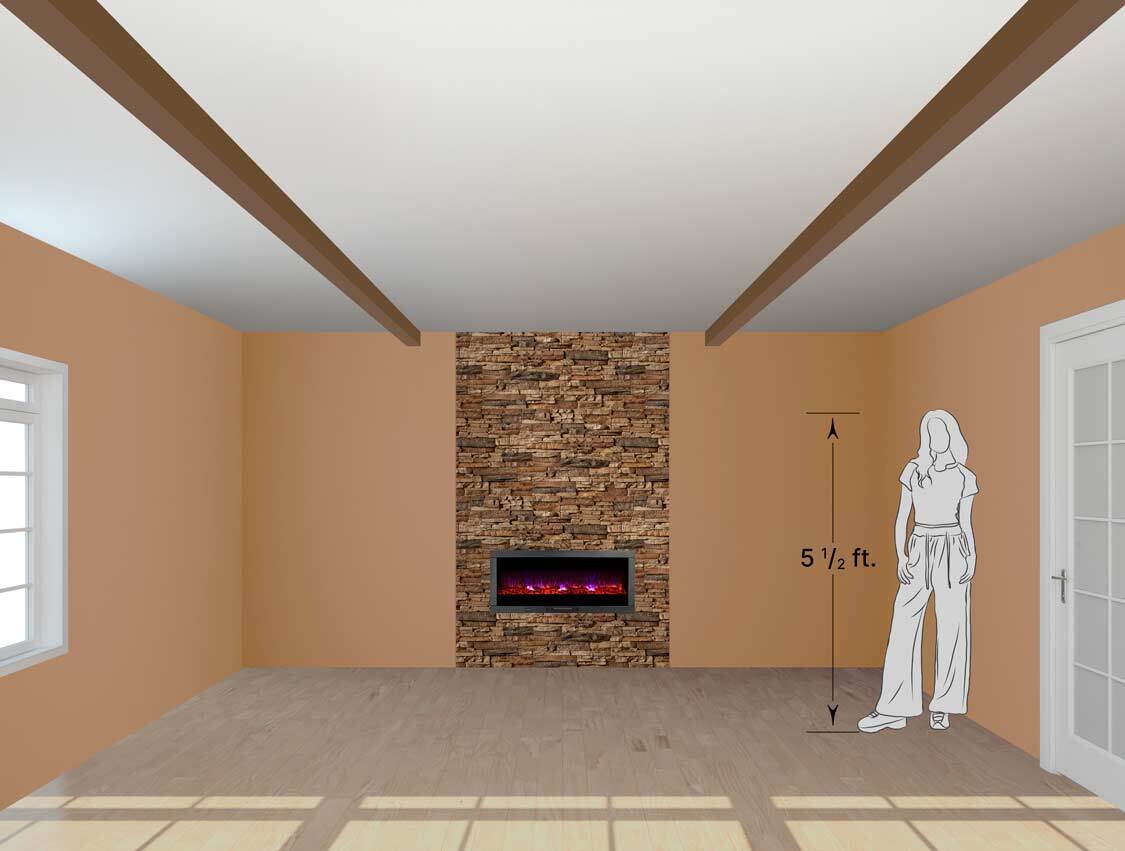
Sample room is 15 feet wide
How Far Apart Should Ceiling Beams Be?
If you’re wondering how far apart ceiling beams should be, the most common spacing is 4 feet apart. However, spacing can vary depending on your room size, beam size, and overall design goals.
Most ceiling beam spacing falls within these general ranges:
- 2–3 feet apart – creates a cozier, more traditional look (ideal for smaller rooms or lower ceilings)
- 3–5 feet apart – the most common and balanced spacing for most homes
- 5–8 feet apart – creates a more open, modern feel (best for larger rooms or vaulted ceilings)
Choosing the right spacing is key to achieving a balanced, visually appealing ceiling, but it’s only one part of the final layout. Several key factors influence how your ceiling beam layout will look and feel.
1. Beam Width and Size
Beam size plays a major role in spacing. Wider or thicker beams typically look best with more space between them, while thinner beams require closer spacing to create a balanced, cohesive look.
2. Room Size
Room size directly impacts how your beam spacing will feel. In smaller rooms, wider spacing can help prevent the ceiling from feeling too low or crowded. In larger rooms, closer spacing can create a more defined and visually engaging design.
3. Installation Approach
Where you place your first and last beams affects the layout of the entire ceiling.
- Beams against the wall: Creates a more structured, enclosed look
- Beams spaced away from the wall: Creates a more open, expansive feel
You can choose equal spacing throughout or vary the spacing near the walls depending on your design preference.
4. Visual Planning
Before installation, map out your beam placement using painter’s tape or a visualization tool. This allows you to test spacing and make adjustments before committing to a final layout.
5. Which Direction Should Ceiling Beams Run?
Beam direction can significantly impact the look of your space. For a more realistic appearance, install beams across the shortest span of the ceiling. You should also consider how beams align with existing ceiling features like lighting, fans, air ducts, or fireplaces. Working around these elements can help guide your layout and make placement decisions more straightforward..
How Many Beams to Put on a Ceiling
Once you’ve determined your ideal ceiling beam spacing, the next step is figuring out how many beams to install.
To estimate this, divide the width of your room by your desired spacing to get a general idea of how many beams you’ll need for a consistent layout.
Be sure to also consider:
- Whether your first and last beams will sit flush against the wall
- If you want equal spacing between beams and walls
- How beam width affects the visual spacing between each beam
Taking these factors into account will help you create a clean, symmetrical ceiling design.
After you’ve received your beams and you’re ready to install, follow our step-by-step faux beam installation instructions.
Ceiling Beam Spacing Design Ideas
Looking at completed projects is one of the best ways to understand how beam spacing, size, and layout come together in a finished space. Below are examples from homeowners and designers using faux wood beams to achieve different results.
Farmhouse Style with Even Beam Spacing
Using Old Barn Faux Wood Beams in Sable, this homeowner added character to an 8-foot ceiling and broke up an otherwise flat surface. The beams are evenly spaced to create rhythm across the ceiling without making the room feel confined.
“They absolutely look perfect and no one can tell they’re not real wood.”
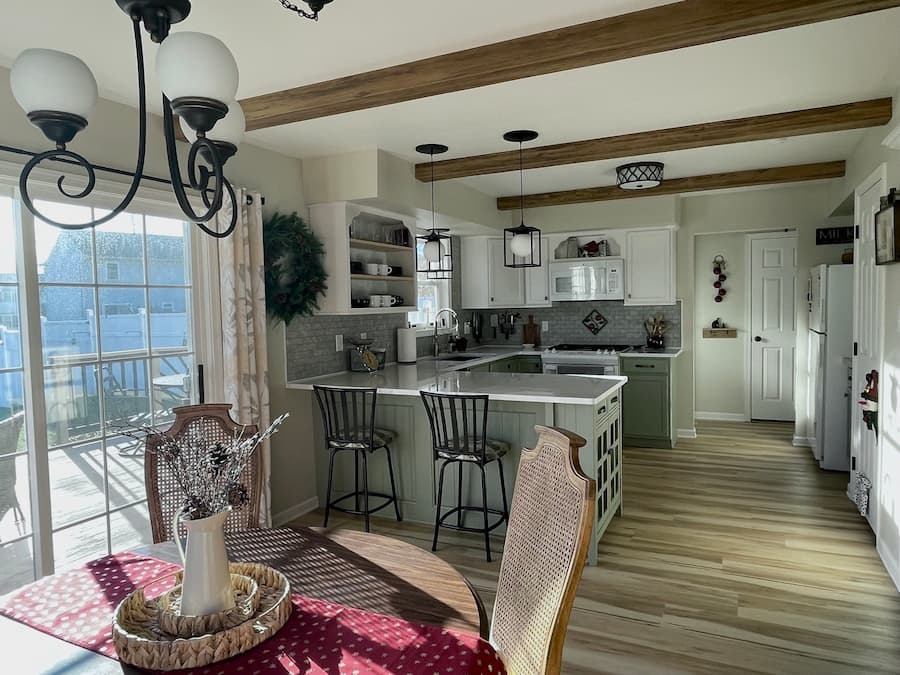 Old Barn Faux Wood Beams in Sable
Defining an Open-Concept Layout
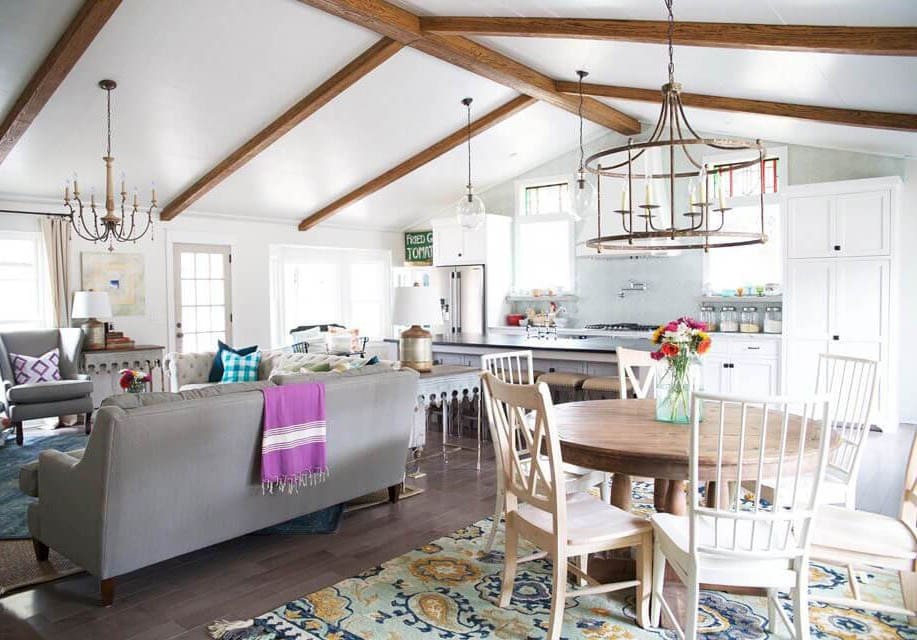
An interior designer incorporated Old Barn Faux Wood Beams in Campfire Cream to help define this open-concept living space. The consistent spacing creates structure across the ceiling while maintaining a clean, cohesive layout.
“Installation of the beams was simple… while providing a realistic rustic, heavy look.”
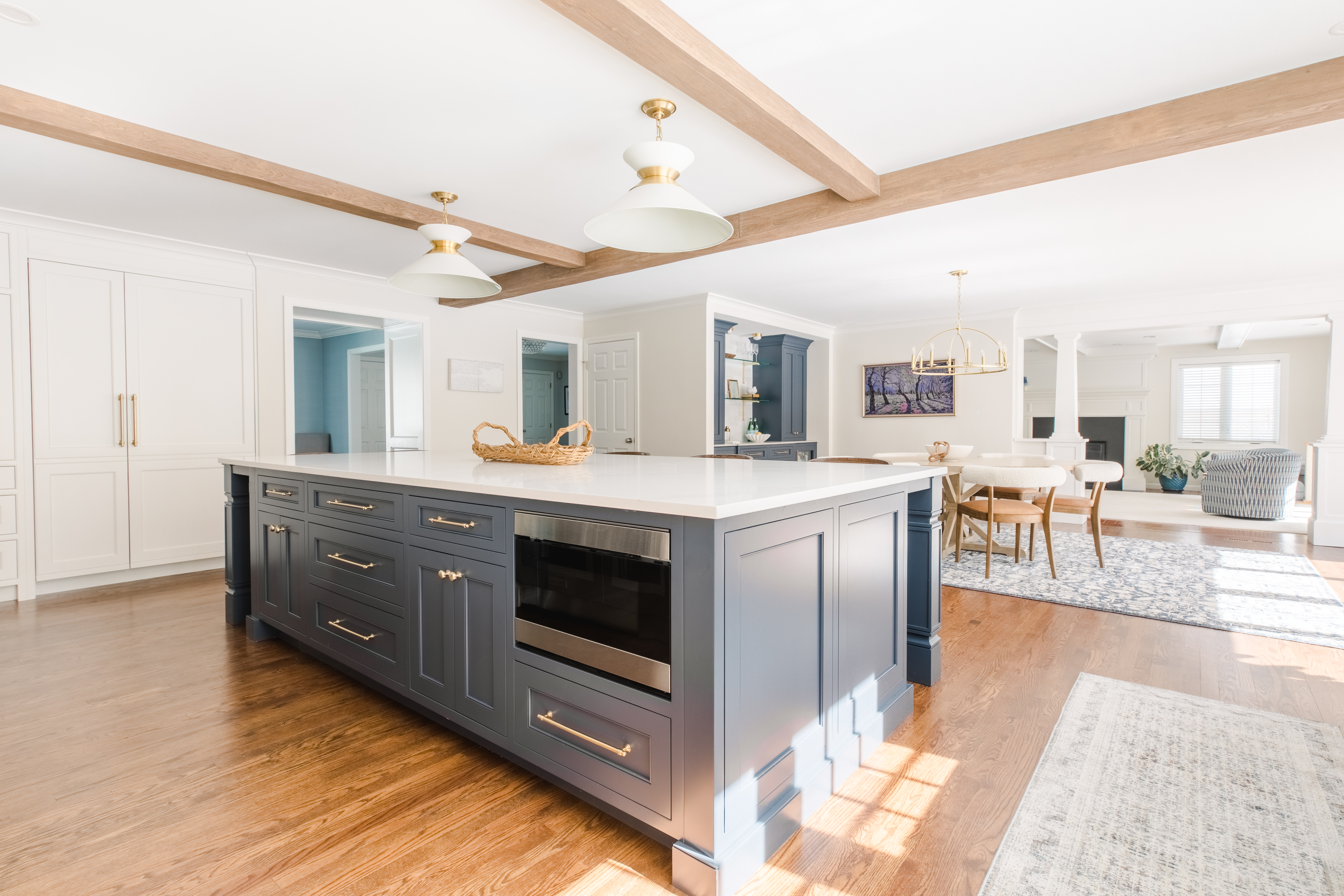 Old Barn Faux Wood Beams in Campfire Cream
Scaling Beam Size for Tall Ceilings
In this full remodel, Hewn Faux Wood Beams in Brunette were installed on a 16-foot ceiling using larger 5" x 8" dimensions. Taller ceilings, thicker beams, and wider spacing help maintain proportion and prevent the design from feeling undersized.
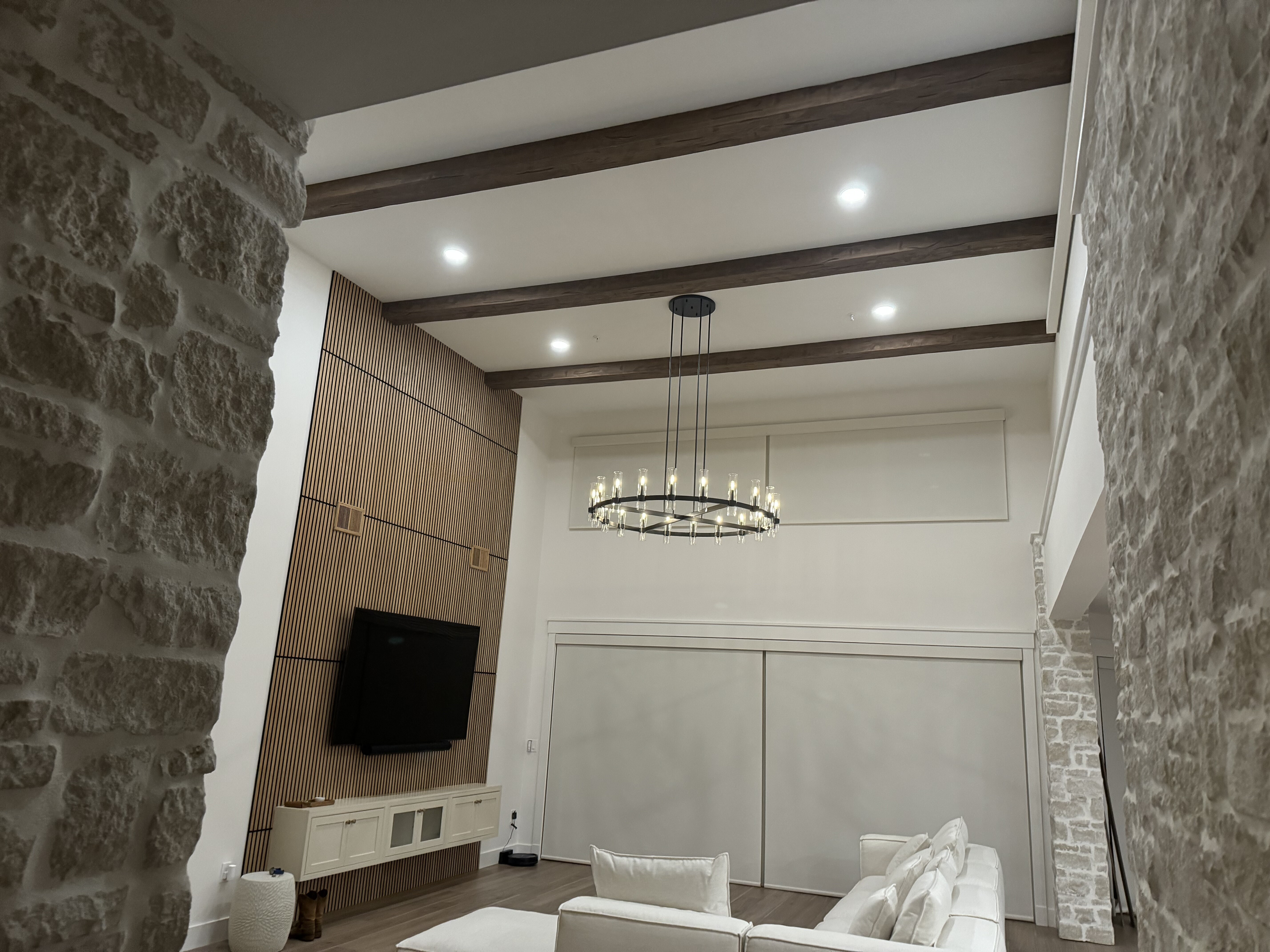 Hewn Faux Wood Beams in Brunette
Breaking Up a Vaulted Ceiling
In this vaulted ceiling design, Old Barn Faux Wood Beams in Sable were installed to interrupt the large expanse of drywall and introduce architectural detail. The spacing allows each beam to stand out while still working together as part of a unified layout.
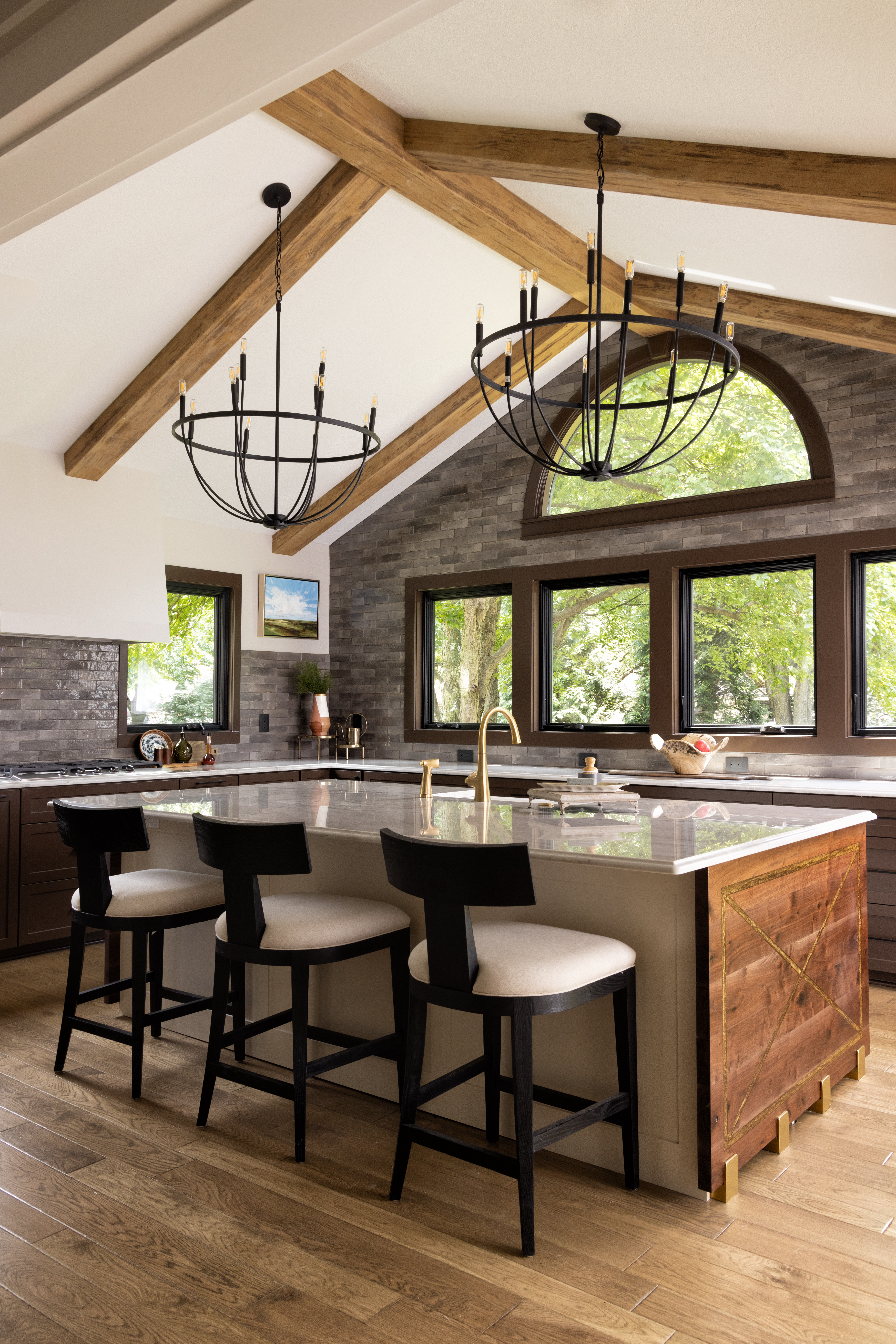 Old Barn Faux Wood Beams in Sable
Following the Ceiling Pitch for a Natural Layout
In this new home, Magnolia Faux Wood Beams in Brunette were installed along the pitch of the vaulted ceiling to align with the space’s structure. The spacing keeps the design from feeling crowded while still giving each beam a clear presence.
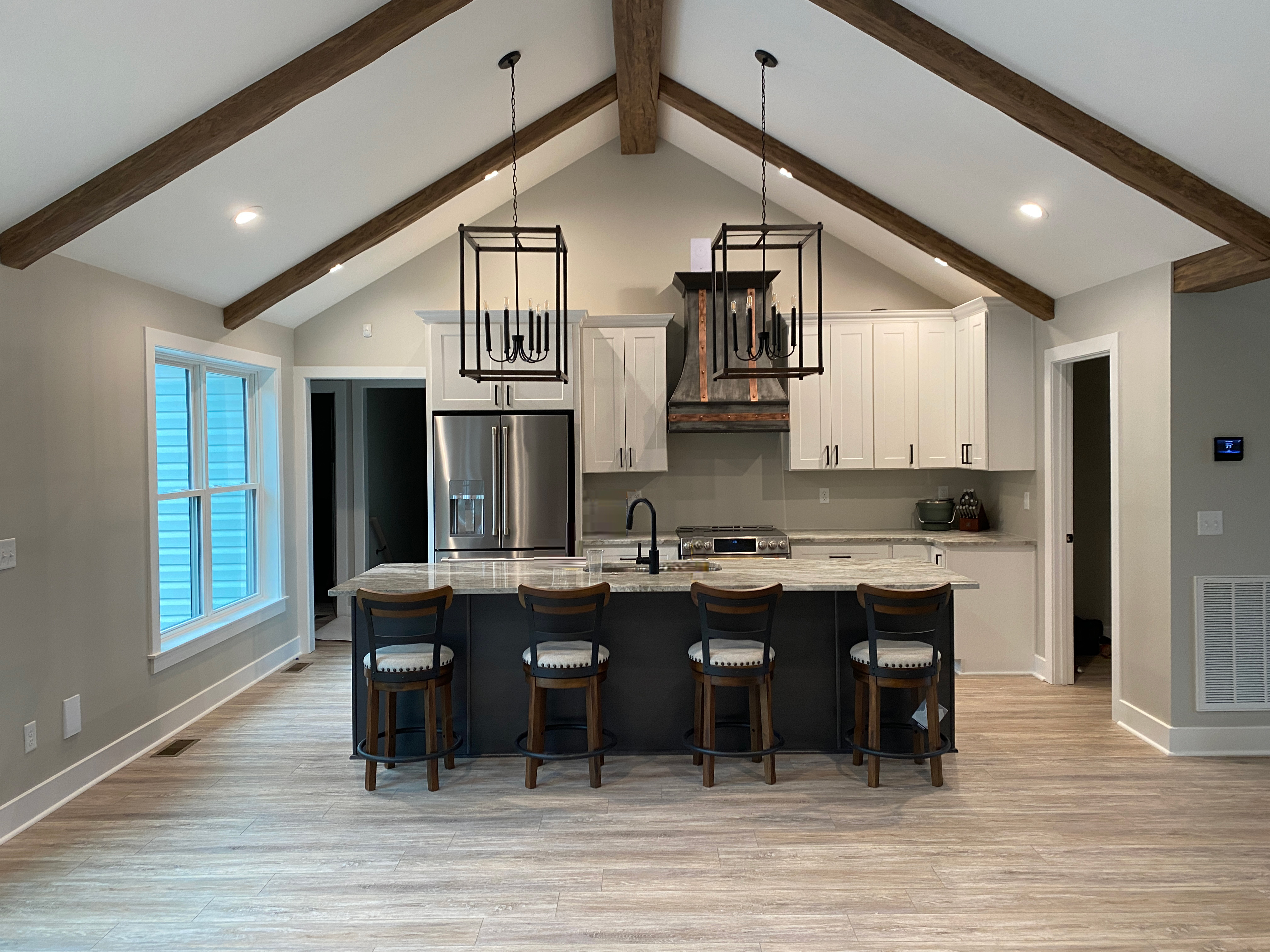
How Faux Wood Ceiling Beams Are Different from Solid Wood Beams
Faux wood beams can help you achieve the look of solid wood, and they offer several advantages compared to solid wood.
Faux beams are made from durable high-density polyurethane, while box-style beams can also be crafted from natural wood using assembled planks. Faux beams are extremely lightweight in comparison— a 6" x 6" x 10’ hollow faux beam weighs under 20 pounds, whereas a solid wood beam would weigh 600 pounds.
The light weight of faux beams makes installation DIY-friendly and a much more affordable project overall. And, faux beams don’t put additional strain on your home’s frame, so they’re safer to use and less likely to cause damage or require maintenance.
On top of that, faux wood beams are available in a wide variety of styles and authentic colors that beautifully mimic the natural notches, kicks, and grains of solid wood.
Planning Your Faux Wood Beam Project
Faux wood beams are a practical and impactful way to upgrade the look of a room without the weight and complexity of solid wood. Before you order your beams, take some time to make a plan. In addition to determining the spacing between faux beams and calculating the right number of beams, you need to carefully select the size, color, and style of the beams you want to install.
At AZ Faux, our faux wood beams are available in a variety of textures and finishes, making it easy to find an option that fits your space. For a more customized look, unfinished beams can be painted or stained to match your design.
In need of more inspiration?
Get started now by browsing our faux beam collections.