Dining Room Design Ideas
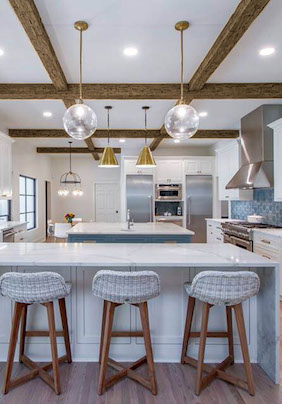
Natural and faux wood beams, wall panels, and other decorative polyurethane products bring the look of real wood, stone, and brick to your dining room—without the weight, upkeep, or high cost.
Want to see it in your space before you commit?
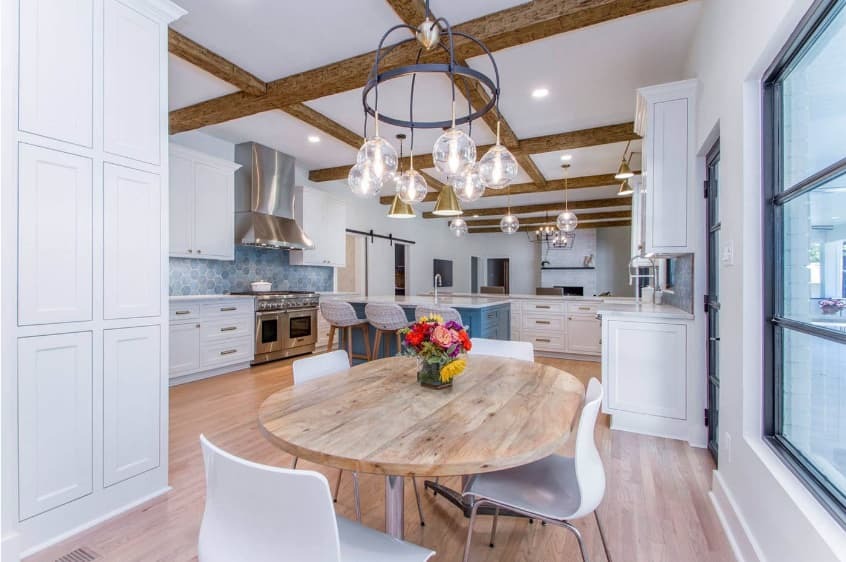
Why Use AZ Faux Products for Your Dining Room Design?

NATURAL WOOD & REALISTIC FINISHES

DIY-FRIENDLY INSTALLATION

HIGH-END LOOK FOR LESS

PROUDLY MADE IN THE USA
Products for your next project
Explore the Photo Gallery
Tips for a Balanced Dining Room Design
As you plan your dining room design with faux or natural wood beams and wall panels, a few key choices can help you create a balanced, intentional look. From placement to color, these details make a big difference in the final result.
Placement
Beam placement plays a major role in how your dining room feels overall.
In smaller rooms or lower ceilings, fewer beams with wider spacing help keep the space feeling open and uncluttered. In larger rooms or higher ceilings, you can add more beams with closer spacing to create structure and visual interest.
When using faux wall panels, be mindful of placement near heat sources such as fireplaces. Always allow proper clearance for safety and performance.
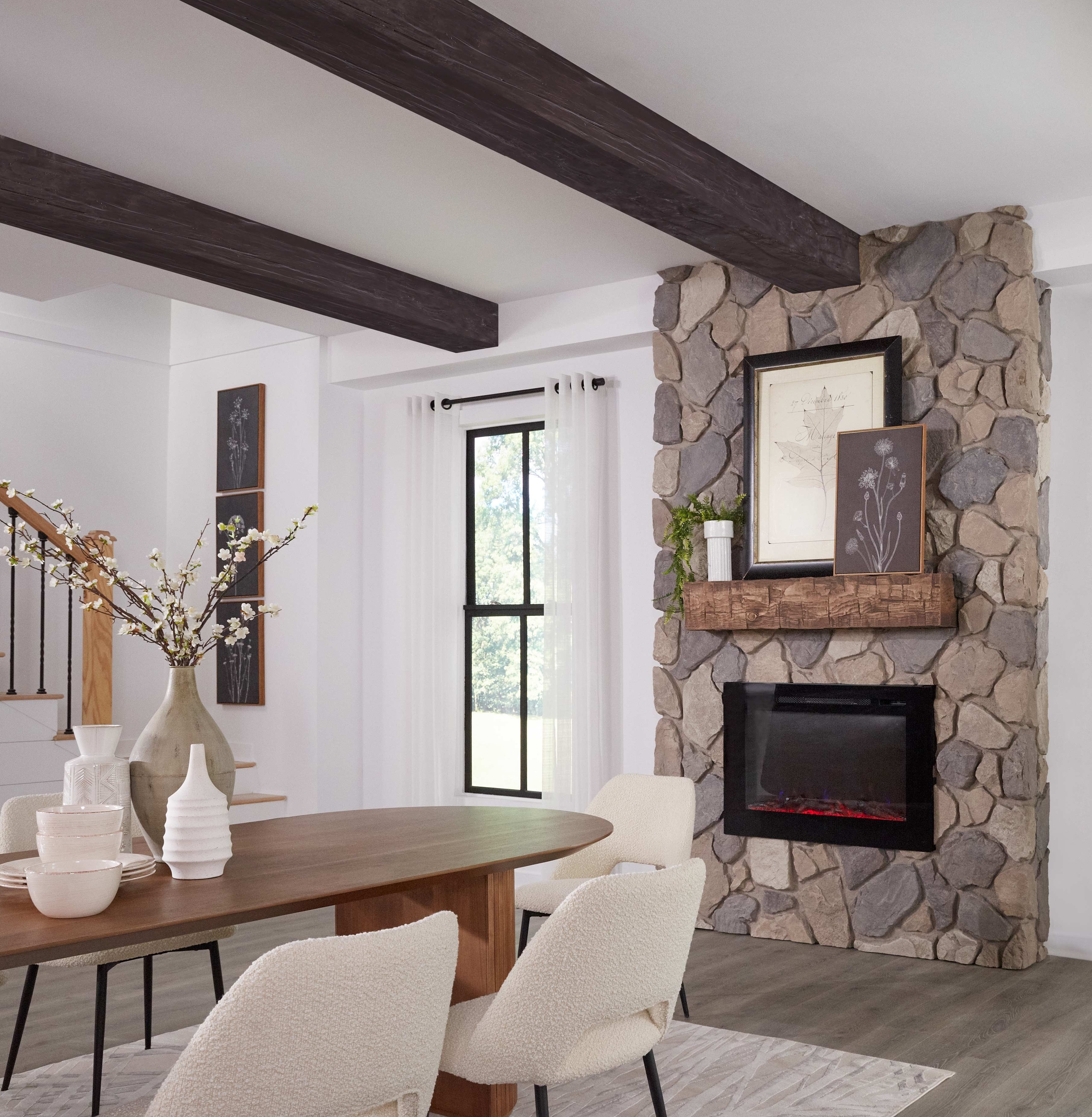
If your dining room includes a fireplace, consider pairing it with a matching mantel to create a cohesive focal point that ties the room together.
Configuration
Your ceiling height and room size will guide the overall design direction.
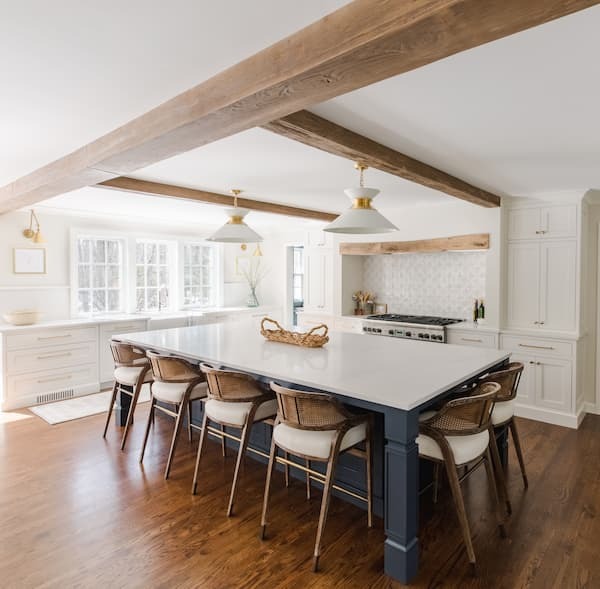
Higher ceilings give you more flexibility to experiment with patterns such as coffered or grid-style beam layouts. These more detailed configurations help fill vertical space and create architectural interest without overwhelming the room.
In lower ceilings, simpler beam layouts tend to work best, keeping the design clean and proportional.
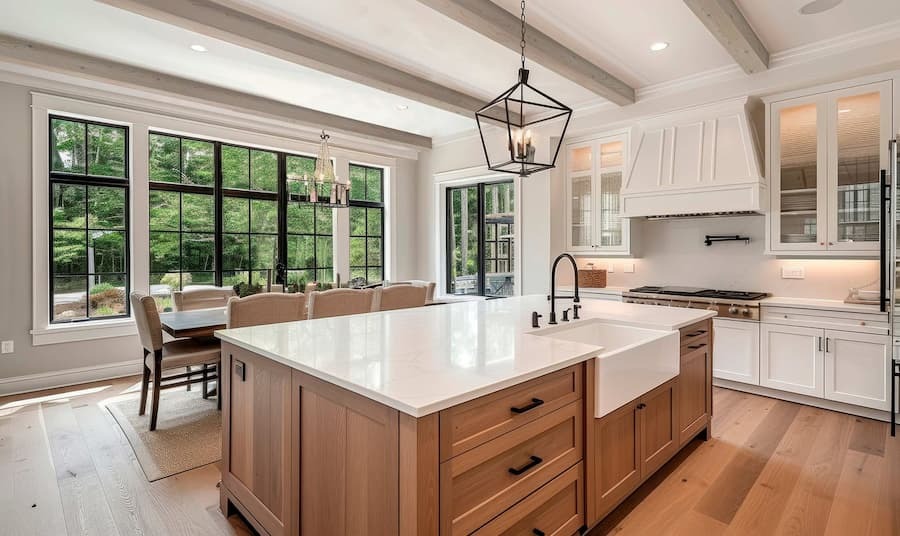
Size & Shape
The beam scale should complement the size of your dining room.
Thicker, more substantial beams are best suited for large dining rooms where they can make a bold architectural statement. In smaller spaces, slimmer beams help maintain balance and avoid overpowering the room.
Intentionally mixing proportions can also guide the eye and add depth to the overall design.
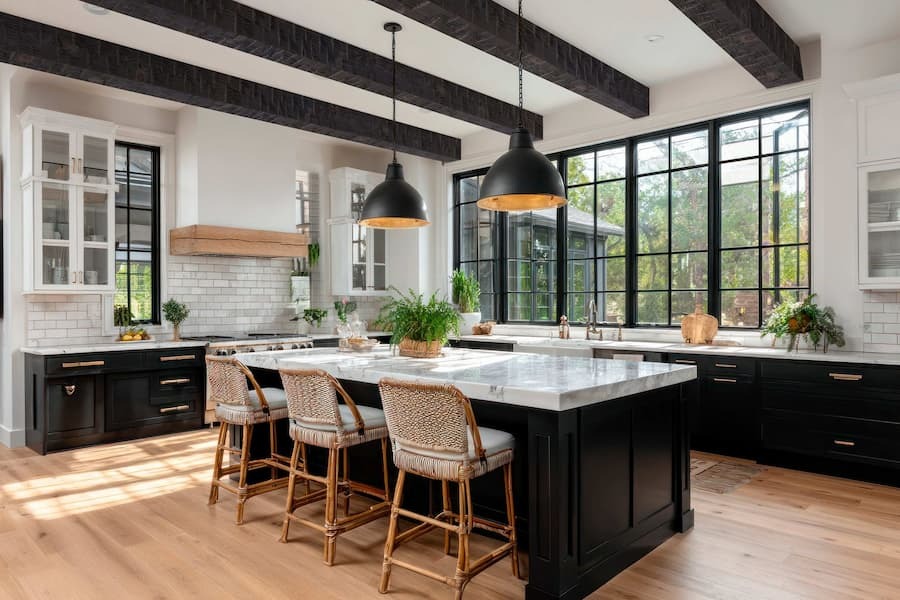
Color & Finish
Our faux and natural wood beams give you full creative control over the final look.
While natural wood tones are popular, you’re not limited to a traditional finish. Unfinished beams can be painted or stained to match your ceiling, furniture, or overall color palette.
This flexibility makes it easy to achieve anything from a rustic farmhouse look to a modern, monochromatic design.
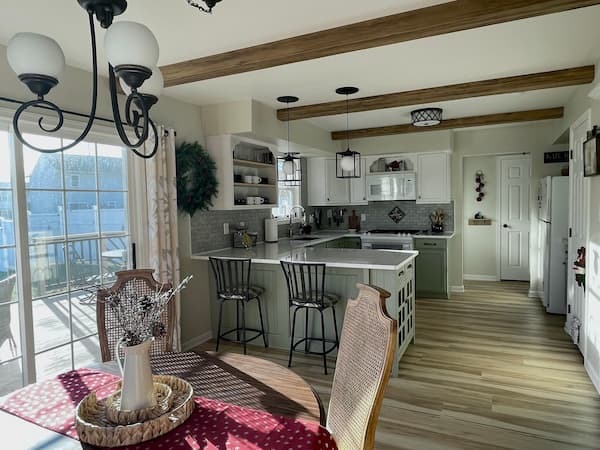
Installation Tips
Our natural and faux wood beams, as well as faux stone or brick panels, are designed to be lightweight and DIY-friendly.
Most installations require only basic tools such as a ladder, screws, and construction adhesive. Because of their lighter weight, they’re easier to handle and place compared to traditional materials.
For step-by-step guidance, explore our installation resources to see how simple the process can be.
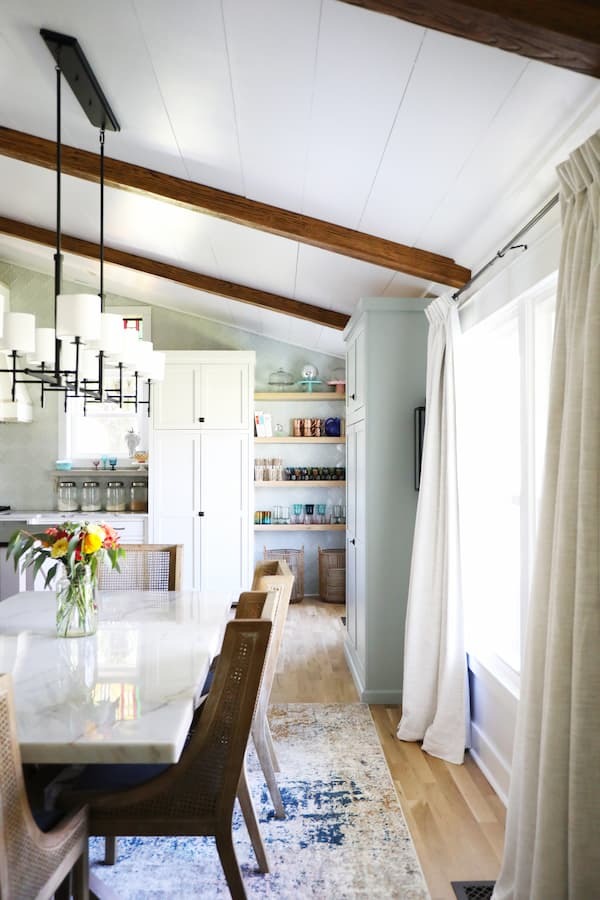
The Benefit of Using AZ Faux Wood Beams & Wall Panels for Your Dining Room
AZ Faux beams—available in both faux and natural wood—and wall panels are a simple, cost-effective way to bring rich architectural detail and designer-level style to your dining room. Together, they help you create a high-end look with flexible material options to suit your space.
✔ Authentic, High-End Look
Faux and natural wood beams, along with realistic wall panels, are designed to replicate the look of real wood, stone, and brick—helping you achieve a polished, designer-style finish.
✔ Lightweight & Easy to Install
Both faux and natural wood beams feature a box beam design that keeps them lightweight and easy to install using basic tools and standard mounting methods.
Faux wall panels, made from high-density polyurethane, are also lightweight and easier to handle and install than traditional materials.
✔ Versatile for Any Design Style
From rustic to modern, beams and panels can be adapted to a wide range of interiors. Beams add ceiling dimension, while panels bring warmth and texture to walls.
✔ Functional & Long-Lasting Design Solution
Beyond aesthetics, beams can conceal wires, ductwork, and ceiling imperfections, while panels provide a durable, low-maintenance alternative to traditional masonry materials.
Combine faux or natural wood beams and faux panels from AZ Faux for a simple weekend transformation that elevates the look and feel of your space.
Ready to start planning your dining room design with faux beams and wall panels?
FAQs
-
No. Our most common size is a 6" wide by 6" high by 10' long beam and it weighs under 19 pounds.
-
Yes, and a stunning one at that. Typically, this is accomplished with larger beams running the length of the room and smaller ones of the same texture running the width. One of our highly experienced designers would be thrilled to help you create the ceiling of your dreams. Call or chat today to get started.
-
Made from high-density polyurethane, faux wood beams are stained and shaped to mimic real wood without the added weight or maintenance requirements. Due to the lighter weight material, they’re easy to install and create less of a strain on your home’s structure.
-
Yes. Both our faux and natural wood beams feature a lightweight box beam design, making them DIY-friendly and easier to install than traditional solid wood beams. Most installations can be completed using basic tools like a ladder, screws, and construction adhesive, depending on your project. For more details about how to install faux wood beams, take a look at our installation guides.
-
-
-


